The photographs


Origin


The Collection of photographs of the Cairo Codex of the Prophets came to the Benito Arias Montano Institute linked to the Cardinal Cisneros Philological Seminary. This seminary aimed at studying the biblical text for the publication of critical editions of the Masoretic Hebrew text and its ancient versions with the purpose of publishing a new Spanish "Polyglot Bible". To achieve this goal, the seminary gathered working materials, obtaining microfilms, copies, and reproductions of some of the most important biblical manuscripts. The introduction to Biblia Babilónica: Profetas Menores 1 notes that studies of these manuscripts were carried out using photographs and microfilms —most of them provided by Professor Paul Kahle to the Arias Montano Institute of the CSIC— and the rest supplied by other libraries that held these manuscripts.

The correspondence between Paul Kahle and Federico Pérez Castro, preserved in the archives of the Benito Arias Montano Institute, documents the relationship between these two scholars, who shared photographic materials (microfilms and copies) for their work on the Cairo Codex of the Prophets. 2.

The Collection


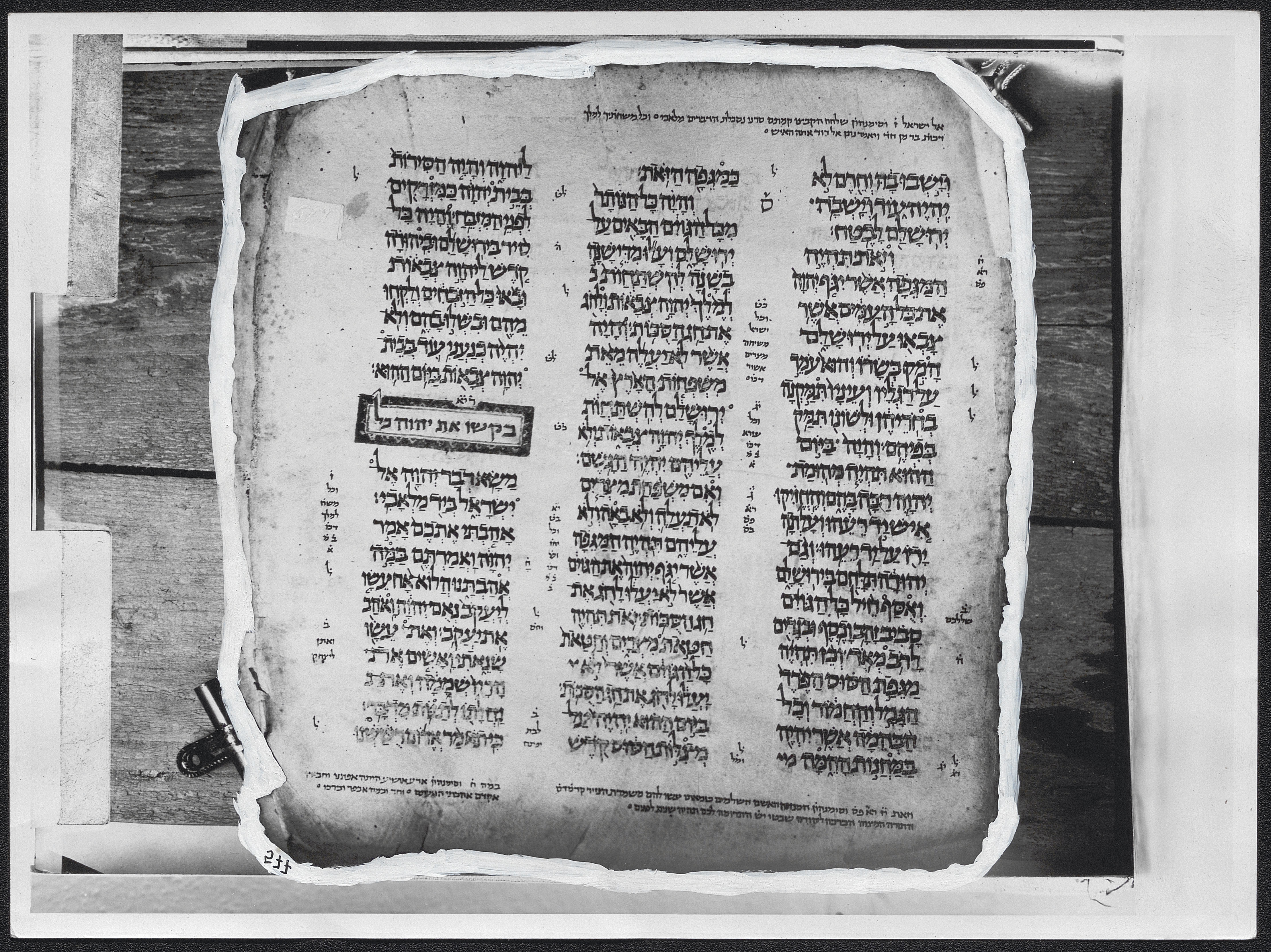
Fig. 1. Photograph with retouching framing a page


Fig. 1. Photograph with retouching framing a page

The collection consists of 584 black-and-white gelatin photographic prints, chemically developed and measuring 18 × 24 cm. The photographs reproduce a mirror image of the Cairo Codex text. Each image is silhouetted and retouched with a framing mask, likely intended for the preparation of a printed edition (Fig. 1).

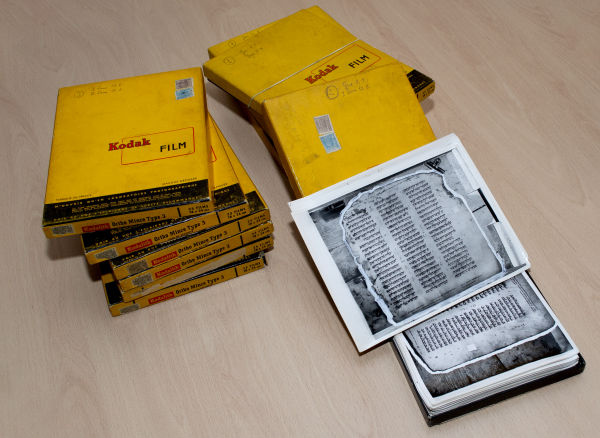
Fig. 2. Original boxes

Fig. 2. Original boxes

The photographs were stored in 12 reused Kodak Film negative boxes (Fig. 2). These boxes, numbered 1 to 12, are labeled with abbreviations identifying the prophetic books, along with chapter and verse numbers corresponding to the codex pages reproduced in the photographs. Some page numbers are missing.


Box 1: Josh 1:1 – Judg 2:9; Photos 1–50
Box 2: Judg 2:9 – I Sam 12:8; Photos 51–100
Box 3: I Sam 12:8 – II Sam 11:2; Photos 101–150
Box 4: II Sam 11:2 – I Kings 8:64; Photos 151–200
Box 5: I Kings 8:64 – II Kings 10:5; Photos 201–250
Box 6: II Kings 10:5 – Isa 17:13; Photos 251–300
Box 7: Isa 17:13 – Isa 65:6; Photos 301–350
Box 8: Isa 65:6 – Jer 30:8; Photos 351–400
Box 9: Jer 30:8 – Ezek 6:4; Photos 401–450
Box 10: Ezek 6:4 – Ezek 37:14; Photos 451–500
Box 11: Ezek 37:14 – Mic 4:11; Photos 501–550
Box 12: Mic 4:12 – Mal 3:24; Photos 551–588

Preservation and Digitization


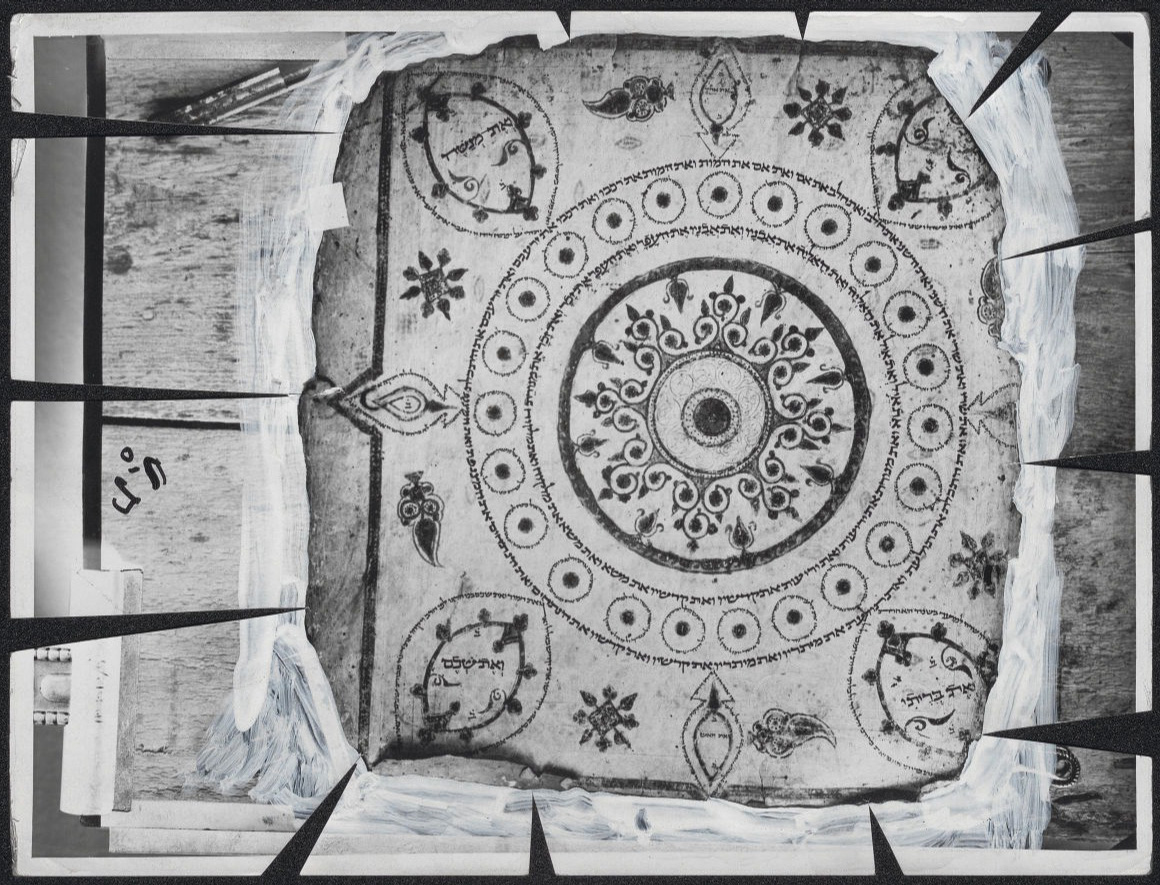
Fig. 3. Photograph of carpet page with cuts on the edges


Fig. 3. Photograph of carpet page with cuts on the edges


The photographs have been stored in neutral pH folders inside two archival-quality cardboard boxes, with polyester sleeves used when necessary. Their condition is generally excellent, showing only slight edge warping, which improved after proper housing in preservation boxes.

Interestingly, the photographs of the carpet pages exhibit cuts toward the interior of the image, likely for the same purpose as the framing mask—to delimit the silhouette for printing (Fig. 3). Some folds from outward bending are visible and annotated in pencil as “proof.” These have been protected with suitable sleeves to prevent further damage.

The original order of the codex has been maintained, with each prophetic book grouped in a small folder for easy access. The final pages and colophon photographs have also been preserved.

Digitization followed the CSIC Network of Libraries and Archives standards for heritage collections, producing high-quality master files that faithfully reproduce the original photographs. Since the originals were taken in mirror image for printing purposes, the digitization process included flipping the images to create consultation copies. Visual quality was enhanced to optimize readability.

The images corresponding to the photographs II Sam 14:15-14:29 and II Sam 14:29-15:10 come from a low quality paper copy kept by the publishing team because the originals on photographic paper are not in the collection.

The result is outstanding: researchers can now view and read the pages as if examining the original codex, with the added advantage of navigating independently through each book.

Additional Material


The collection also includes 15 rolls of 35 mm black-and-white negatives, delivered by Emilia Fernández Tejero to Elvira Martín Contreras for research purposes. These materials complement the documentary collection and add archival value, as they represent the working tools of the Hebrew Bible team during their study of the codex. Aditionally, the Microfilm Collection of the Biblical Philology Department preserves several microfilm strips (250 frames) reproducing the Cairo Codex of the Prophets, with each frame containing two folios of the manuscript 3.

Quality of the Photographs


The exceptional value of these photographic prints lies in their remarkable quality, far superior to that of both the facsimile edition and the microfilms. This superior definition greatly facilitates reading and reveals details of the original manuscript that were previously imperceptible.

Digitization has further enhanced image clarity, producing a resource that is not only more faithful to the original but also more accessible, ensuring its preservation for future generations of researchers and scholars.
Detalle imagen

The Cairo Codex of the Prophets: digital edition

Recommended citation: Martín-Contreras, Elvira and Biblioteca Tomás Navarro Tomás. The Cairo Codex of the Prophets: digital edition. [online] https://biblioteca.cchs.csic.es/Codice-Profetas-Cairo/ [date of access]

Detalle imagen